
Land Clearing & Pool Services in Cape Coral, FL
Local Land Clearing Expertise
In Pelican, Burnt Store, and across Cape Coral, FL, professional land clearing service transforms overgrown lots into buildable, safe property. Our crew removes trees, brush, stumps, and debris—preparing your site for construction, landscaping, or development. We handle the complexity: permits, drainage concerns, wetland boundaries, and the canal-system rules that make Cape Coral clearing different from inland work.
How We Work
A structured, safety-first approach from assessment to final site prep.
Site Survey & Assessment
We visit your Cape Coral property to evaluate terrain, vegetation type, wetlands, canals, and utility lines. This inspection determines the right approach and identifies any special permits needed.
Permit & Plan Review
We guide you through Cape Coral's permitting process, which ties land clearing to building codes, drainage rules, and environmental protections. A clear plan prevents costly delays.
Erosion & Drainage Setup
Silt fences and protective measures are installed to prevent stormwater and sediment from washing into canals—critical in neighborhoods like Caloosahatchee near the Caloosahatchee River.
Vegetation Removal & Mulching
Using forestry mulching, we grind trees and brush in place, leaving organic mulch that stabilizes soil and prevents erosion—ideal for Cape Coral's sandy terrain.
Grading & Final Prep
The site is leveled and graded according to plan. Proper drainage slopes and stable building pads ensure your foundation rests on solid ground.
Debris Removal & Cleanup
All cleared material is hauled off or disposed of per city code. Your lot is left clean, safe, and code-compliant—ready for the next phase.
Every step is communicated clearly so you know what's happening and why.
Our Services
Clearing solutions tailored to residential and commercial needs across Cape Coral neighborhoods.
Residential Lot Clearing
New construction in Trafalgar, Del Prado, or other Cape Coral neighborhoods often requires clearing native pines, live oaks, and sabal palms. We identify heritage trees worth preserving and remove obstacles safely, respecting HOA rules and property boundaries.
- Tree and stump removal with precision stump grinding
- Debris hauling and site cleanup
- Permit navigation and code compliance
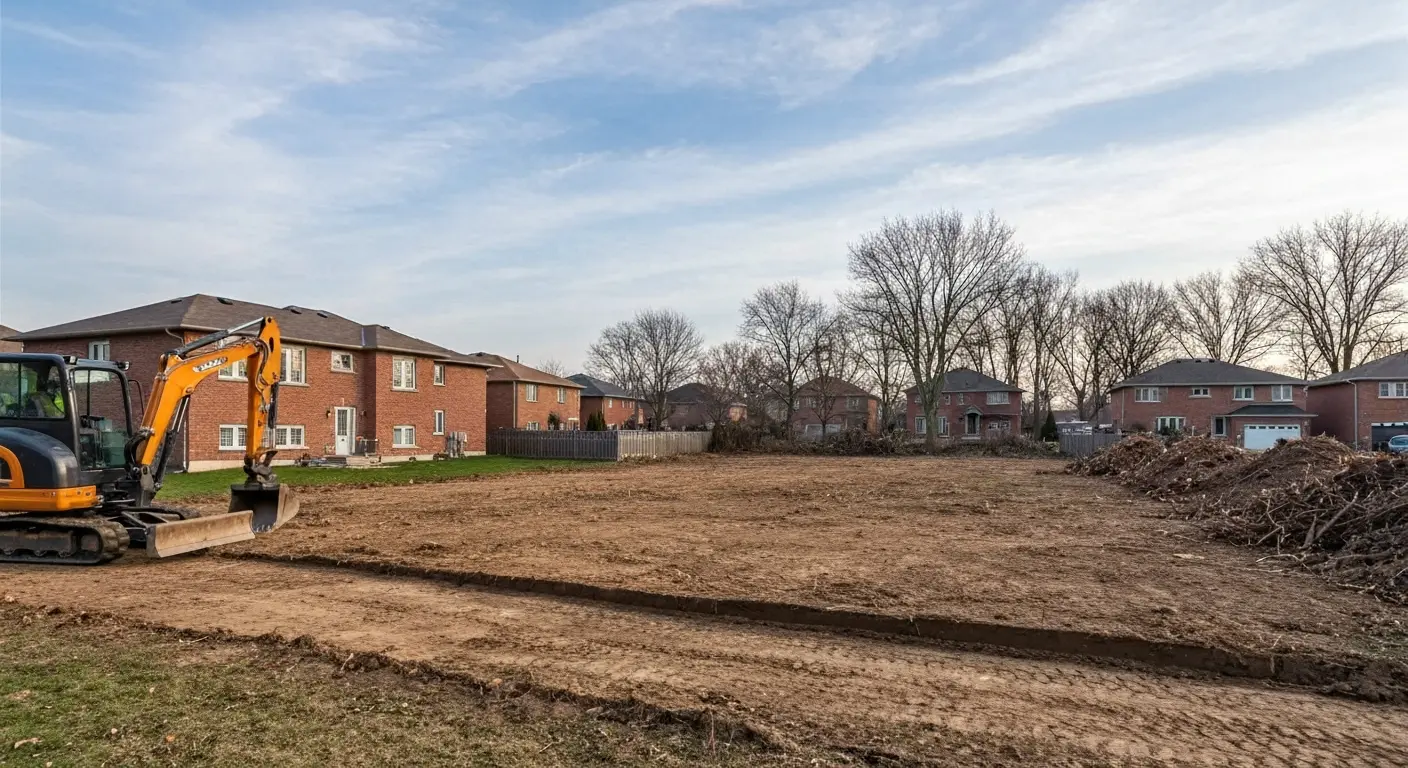
Raw lot cleared for home construction in Trafalgar.
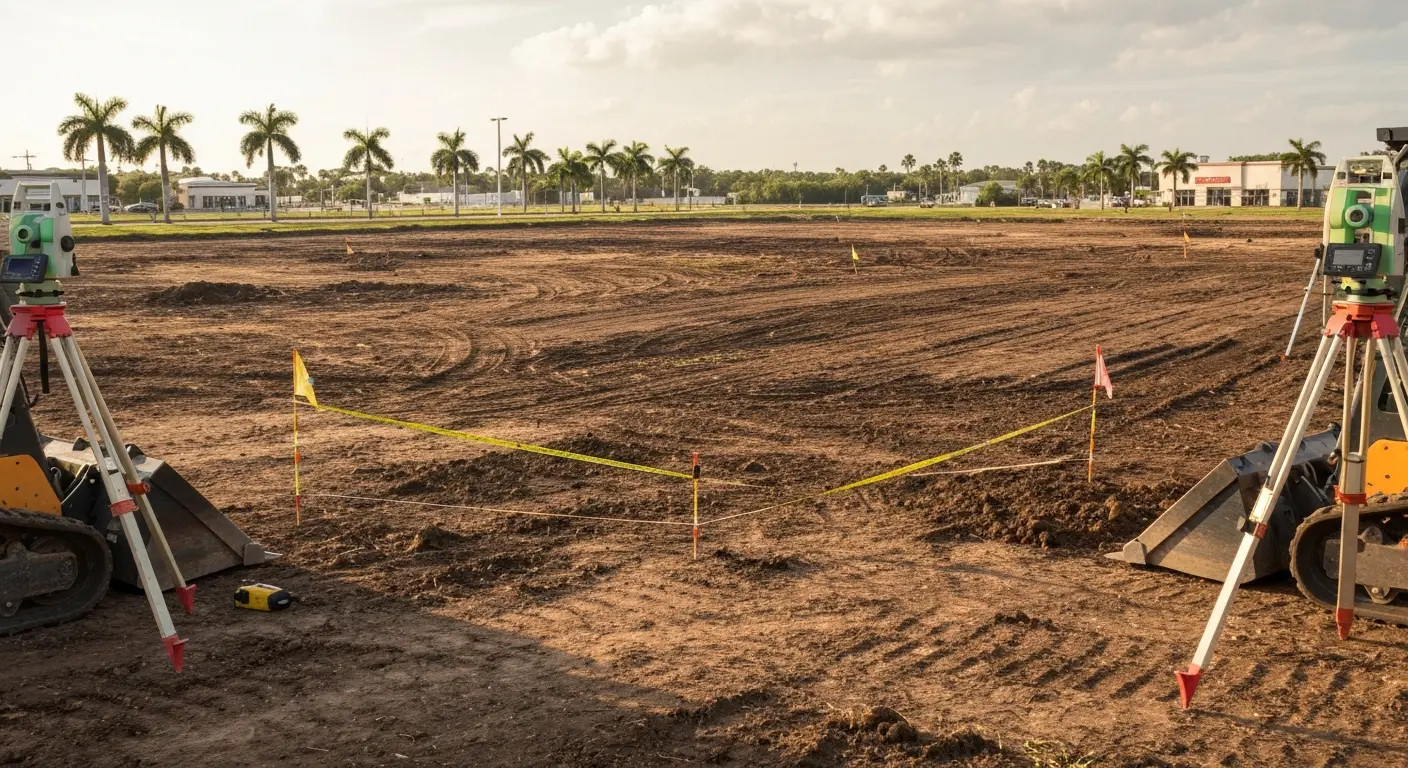
Commercial land prep in central Cape Coral.
Commercial Site Clearing
Larger projects require coordination with multiple city departments. We manage survey markouts, drainage design, utility locates, and environmental approvals. Whether you're in Pelican, Hancock, or another neighborhood, we handle scalable clearing for any development.
- Bulk vegetation removal and forestry mulching
- Utility line locating and coordination
- Environmental and wetland assessment support
Forestry Mulching & Erosion Control
Forestry mulching is the preferred method in Cape Coral. It stabilizes soil, reduces fire hazards, and prevents the top-soil disturbance that traditional methods cause. Critical when clearing near canals or in flood zones.
- In-place vegetation grinding with GPS equipment
- Organic mulch bed for immediate erosion protection
- Stump and root removal for foundation stability
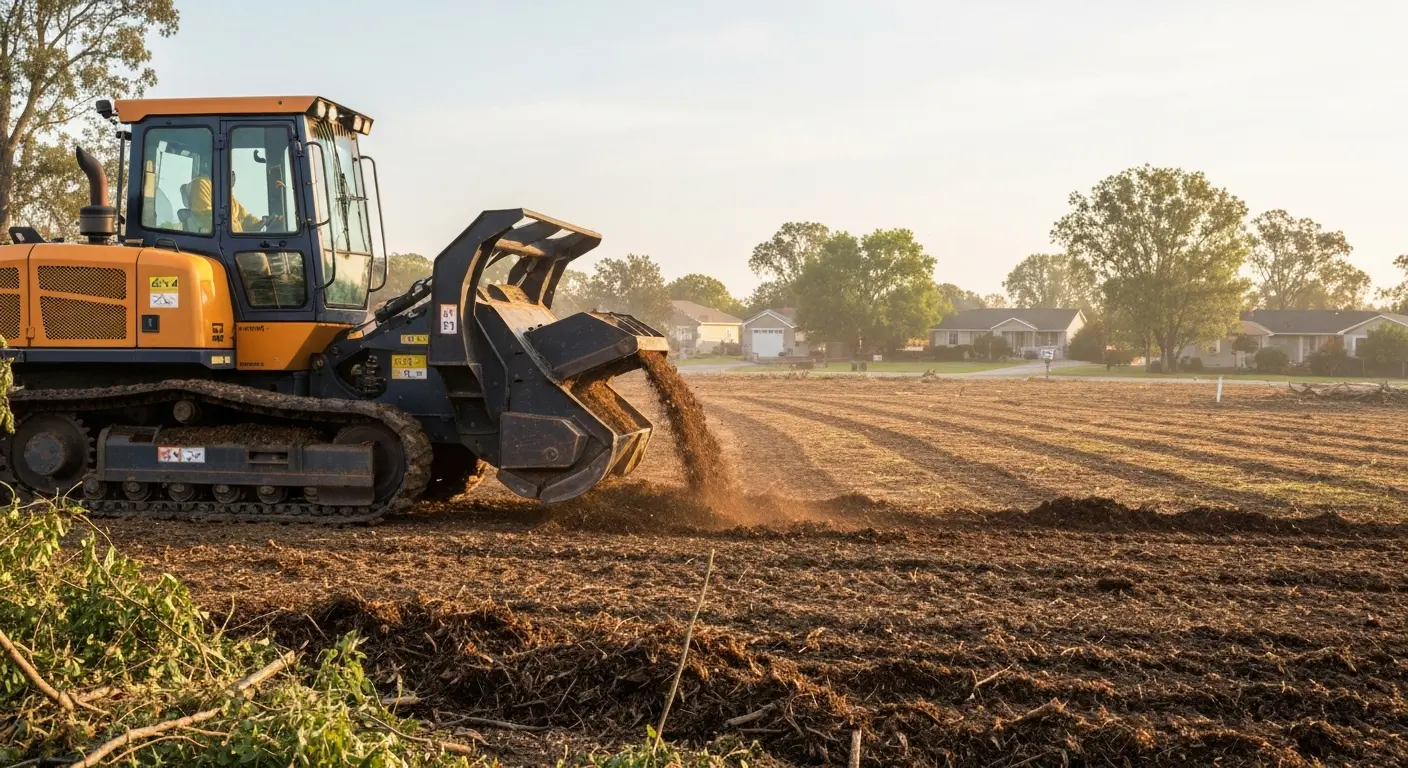
Forestry mulching preserves soil health while clearing property.
Why Local Expertise Matters
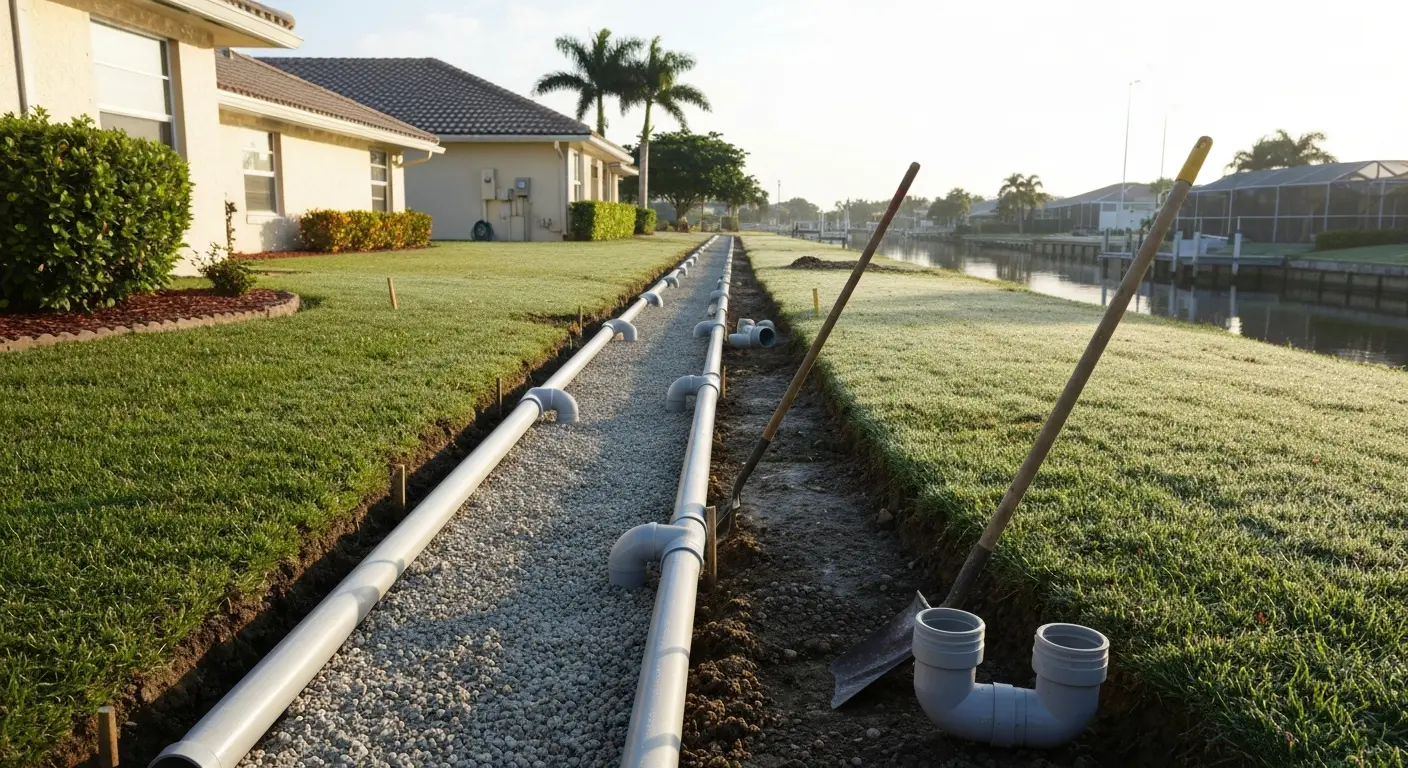
Waterfront properties need specialized drainage protection.
Cape Coral's Unique Challenges
Cape Coral is known as a 'Waterfront Wonderland', with over 400 miles of navigable waterways. This means drainage, wetlands, mangrove protection, and stormwater rules dominate clearing decisions. One wrong cut near a canal or wetland triggers costly fines and environmental remediation.
Because Cape Coral's neighborhoods are woven around canals and drainage systems, the city takes water flow and storm protection seriously. Clearing and grading can't disrupt drainage or cause erosion. Wetlands are strictly off-limits unless you've secured additional permits from state or federal agencies. We know these rules and plan accordingly.
Forestry Mulching Advantage
The best method for land clearing in Cape Coral, Florida is forestry mulching. This process uses a specialized machine to mulch the brush and trees in place. Nothing is uprooted, and no soil is destabilized. In neighborhoods like Burnt Store and Mariner, where sandy soils erode easily, this approach prevents the costly damage that traditional excavation causes.
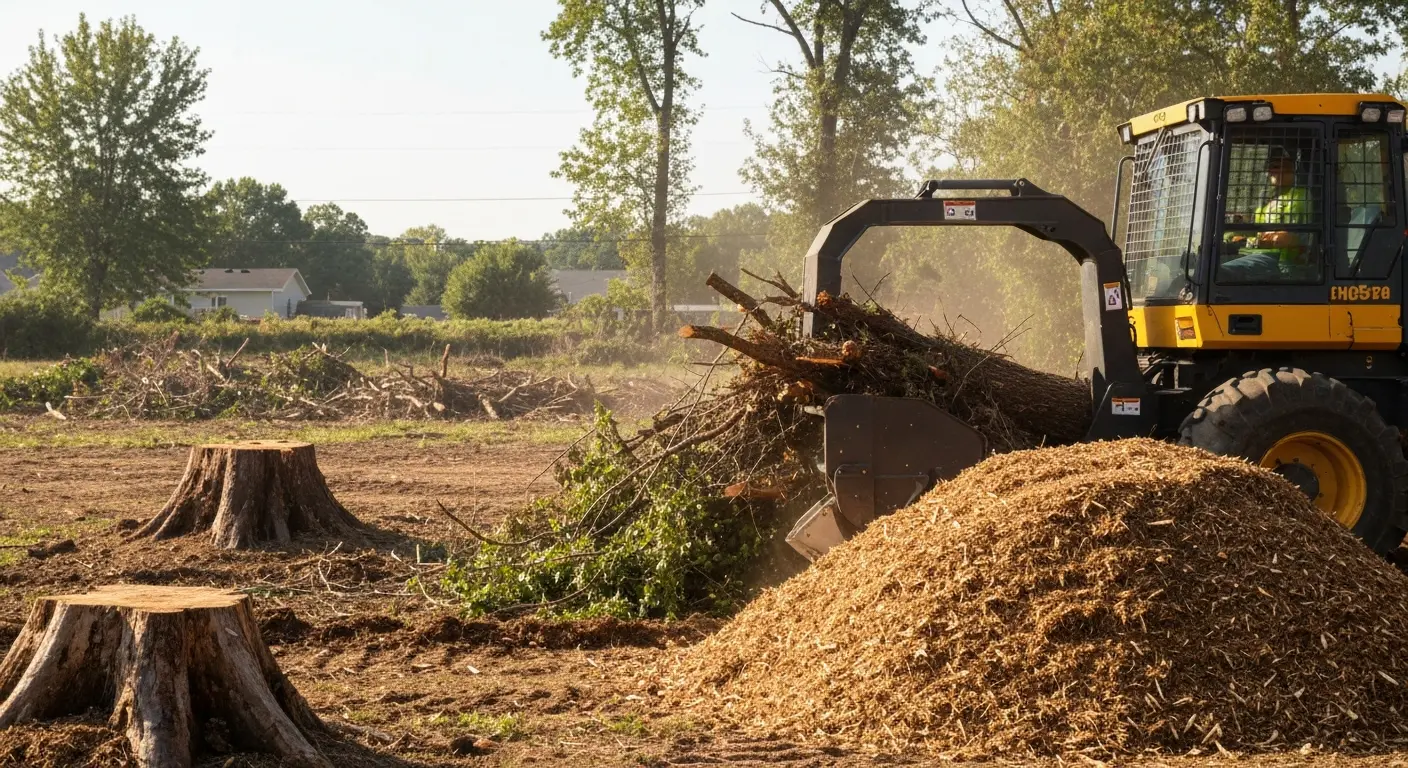
State-of-the-art forestry mulching for efficient clearing.
20+ years of Cape Coral clearing work — we've handled hundreds of residential and commercial projects across every neighborhood, from waterfront to inland. We know the permitting office staff, local surveyors, and environmental consultants by name.
Serving Cape Coral & Nearby Areas
Our work spans the breadth of Cape Coral—from Pelican and Trafalgar in the south to Burnt Store and Mariner in the northwest. We're familiar with each neighborhood's lot sizes, building types, and local rules.
South Cape Coral
Pelican, Caloosahatchee, and South Cape neighborhoods feature waterfront homes, canal-front lots, and marina access. Rotary Park is part of the Great Florida Birding Trail, with walking paths, wetlands, salt flats, and ponds. Clearing here demands careful drainage protection and awareness of nearby ecological preserves.
Trafalgar & Central
Trafalgar, Del Prado, and Hancock offer a mix of single-family ranch homes, newer estates, and vacant land. Hancock offers canal-front homes and walkable streets, with things to do at the Strausser BMX Sports Complex and Lake Kennedy Community Park. Projects here range from small residential lots to multi-acre developments.
Northwest Cape Coral
Mariner is a quiet suburb featuring newer, single-family homes with canal access, with Coral Oaks Golf Course and Northwest Softball Complex nearby. Burnt Store offers waterfront access and larger building lots. Clearing here often involves extensive brush removal and grading for elevated pads in flood zones.
Frequently Asked Questions
Do I need a permit to clear my Cape Coral lot?
Yes—the City of Cape Coral requires permits for land clearing, especially when removing trees or altering the natural landscape. In Cape Coral, clearing is tied directly to the building permit process. A separate clearing permit is only required if you plan to clear the lot without starting construction right away.
What trees can we keep in Cape Coral?
If a Cape Coral lot isn't already clear, it will often feature slash pines, live oaks, and sabal palms—native species that can provide shade, curb appeal, and a natural buffer. Large canopy natives, sometimes called 'heritage trees,' are even encouraged for preservation under city rules. We assess which trees add value and which need removal.
Why is forestry mulching better than traditional clearing?
Forestry mulching leaves behind a blanket of organic mulch that is great for the environment. This mulch bed helps slow erosion, promote healthy new growth, and cool and stabilize the soil. No soil destabilization, no burning, no piles to haul—faster and cleaner for your Cape Coral property.
How do you handle drainage and wetland issues?
Because Cape Coral's neighborhoods are woven around canals and drainage systems, the city takes water flow and storm protection seriously. Clearing and grading can't disrupt drainage or cause erosion. Wetlands are strictly off-limits unless you've secured additional permits from state or federal agencies. We conduct a full site assessment and coordinate with environmental specialists if needed.
What about utility lines and underground hazards?
Underground utility lines are pre-installed in many lots, despite the vacant look of the land. Hitting a water, sewer or electrical line during clearing is expensive and dangerous. We always utilize an underground utility locator before any excavation or heavy equipment is moved in.
DISCOVER WHAT OUR CUSTOMERS HAVE TO SAY ABOUT US
REVIEWS
proudly serving these areas
Lee County, FL
Cape Coral, FL
Hendry County, FL
Bonita Springs, FL
Naples, FL
Glades County, FL
Punta Gorda, FL
Charlotte County, FL
READY TO take the next step?
get a free quote TODAY!
QUICK LINKS
our services
service areas
operating HOURS
Mon: 8:00 am - 5:00 pm
Tue: 8:00 am - 5:00 pm
Wed: 8:00 am - 5:00 pm
Thu: 8:00 am - 5:00 pm
Fri: 8:00 am - 5:00 pm
Sat: Closed - Closed
Sun: Closed - Closed