
Land Clearing & Pool Services in Lee County, FL
Local Land Clearing Expertise
In Fort Myers, Cape Coral, Lehigh Acres, and across Land Clearing Service Lee County, FL communities, property clearing is both an art and a regulatory challenge. This page covers what land clearing involves, how permits work here, and why local expertise matters when removing vegetation, brush, and debris from your property.
Southwest Florida's native species, invasive plant threats, gopher tortoise habitat, and wetland setbacks create a complex clearing environment. Professional clearing navigates these realities so your project stays on schedule and compliant.
How We Work
From site assessment through final grading, every step is documented and transparent.
Our Process
Land clearing in Lee County starts with understanding what lives on your property and what rules apply. We assess vegetation type, check for gopher tortoise habitat, identify protected trees, and review wetland proximity before any equipment arrives.
Assess & Survey
Walk your property, identify vegetation, check for gopher tortoise burrows, and review maps for wetlands or protected species habitat.
Obtain Permits
Submit vegetation removal permits to Lee County, coordinate wildlife surveys if needed, and handle SFWMD approvals for wetland setbacks.
Clear & Remove
Mechanically clear vegetation, stumps, and debris. Haul debris or chip on-site. Respect protected areas and setbacks throughout.
Grade & Finish
Rough grade the site for construction or landscaping. Address drainage compliance and leave the property ready for what comes next.
You'll always know what's happening next—and the status of permits.
Our Services
Clearing work varies by lot size, vegetation density, and local rules.
Residential Lot Clearing
Lehigh Acres and Cape Coral hold tens of thousands of platted vacant lots. Most require gopher tortoise surveys before mechanical work, vegetation removal permits, and careful grading. We handle the survey coordination, permitting, and clearing so your lot is construction-ready.
- Gopher tortoise surveys and relocation permits
- Native tree protection compliance
- Debris removal and haul-off
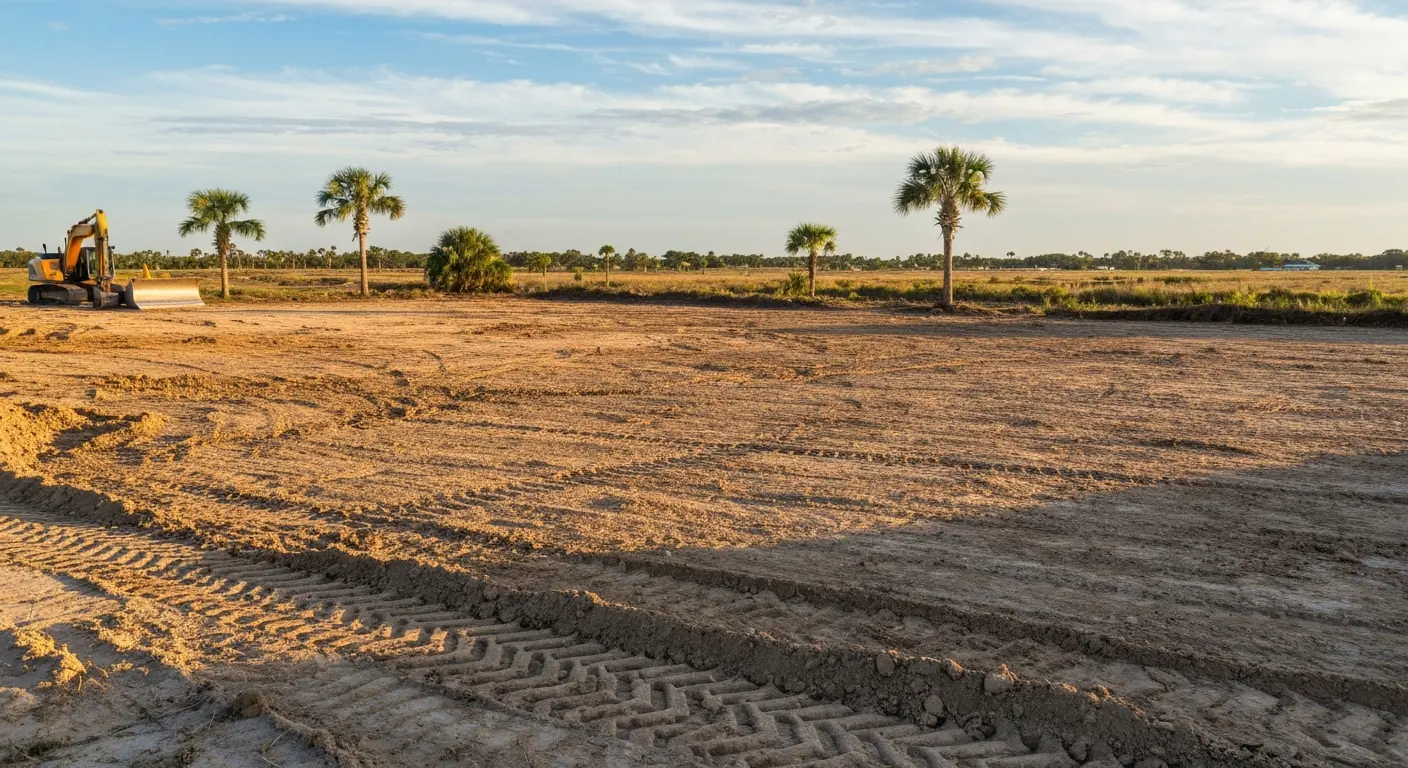
Cleared residential lot in Lehigh Acres ready for construction
Invasive Species Removal
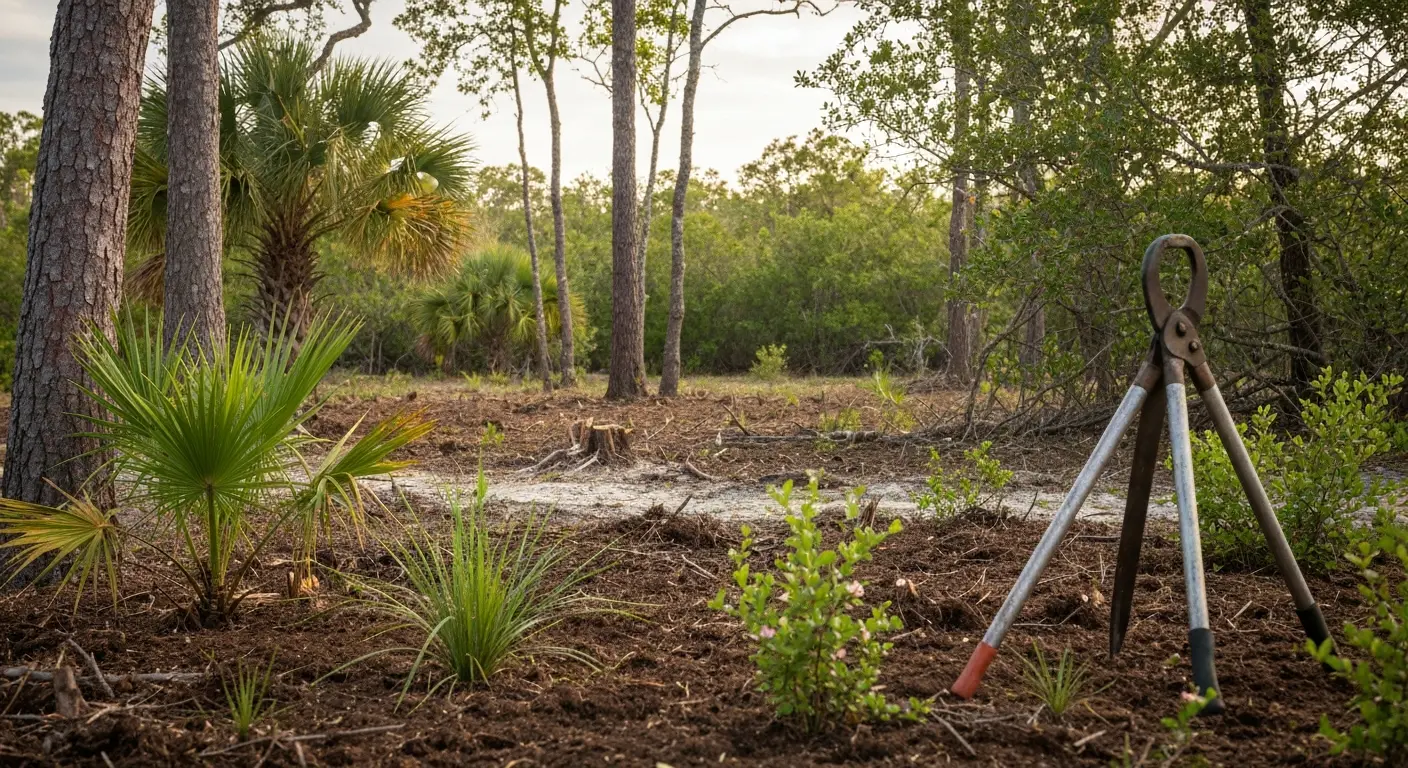
Brazilian pepper and melaleuca removal near Fort Myers Beach
Brazilian pepper, melaleuca, air potato, and Australian pine dominate Lee County properties. Florida encourages their removal—in some cases exempting it from standard permits. We handle species-specific removal and ensure compliance with state and federal guidelines.
- Florida-compliant invasive removal
- Fire hazard mitigation
- Native habitat restoration support
Commercial & Multi-Lot Clearing
Development along Daniels Parkway, Colonial Boulevard, and US-41 requires large-scale site prep. Retail, healthcare, and logistics projects demand coordination with general contractors, tight scheduling, and strict permit management. We specialize in commercial clearing from initial site assessment through final grading.
- CAT track loaders and 20+ ton excavators
- Production-grade site prep
- SFWMD and Lee County permit coordination
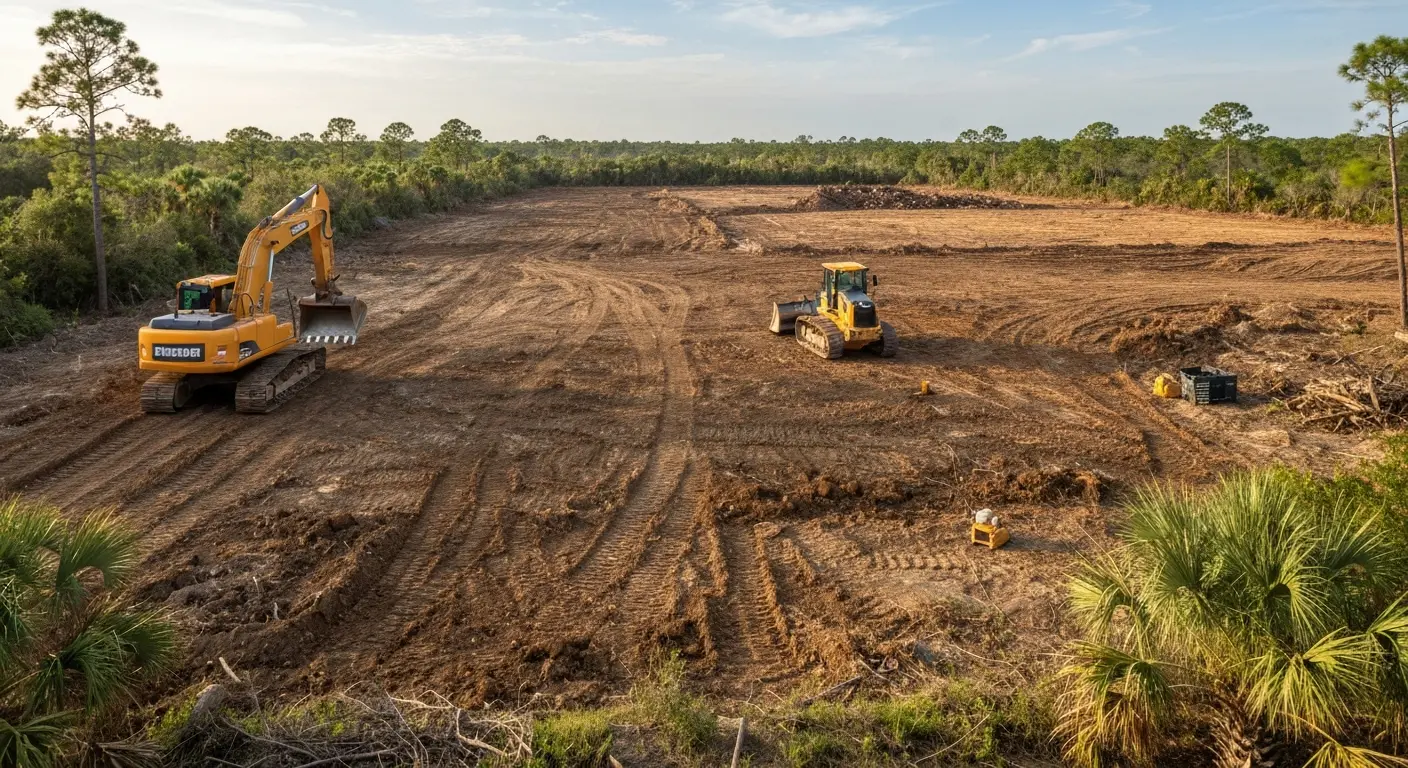
Large-scale commercial site prep in North Fort Myers
Post-Hurricane Debris Cleanup
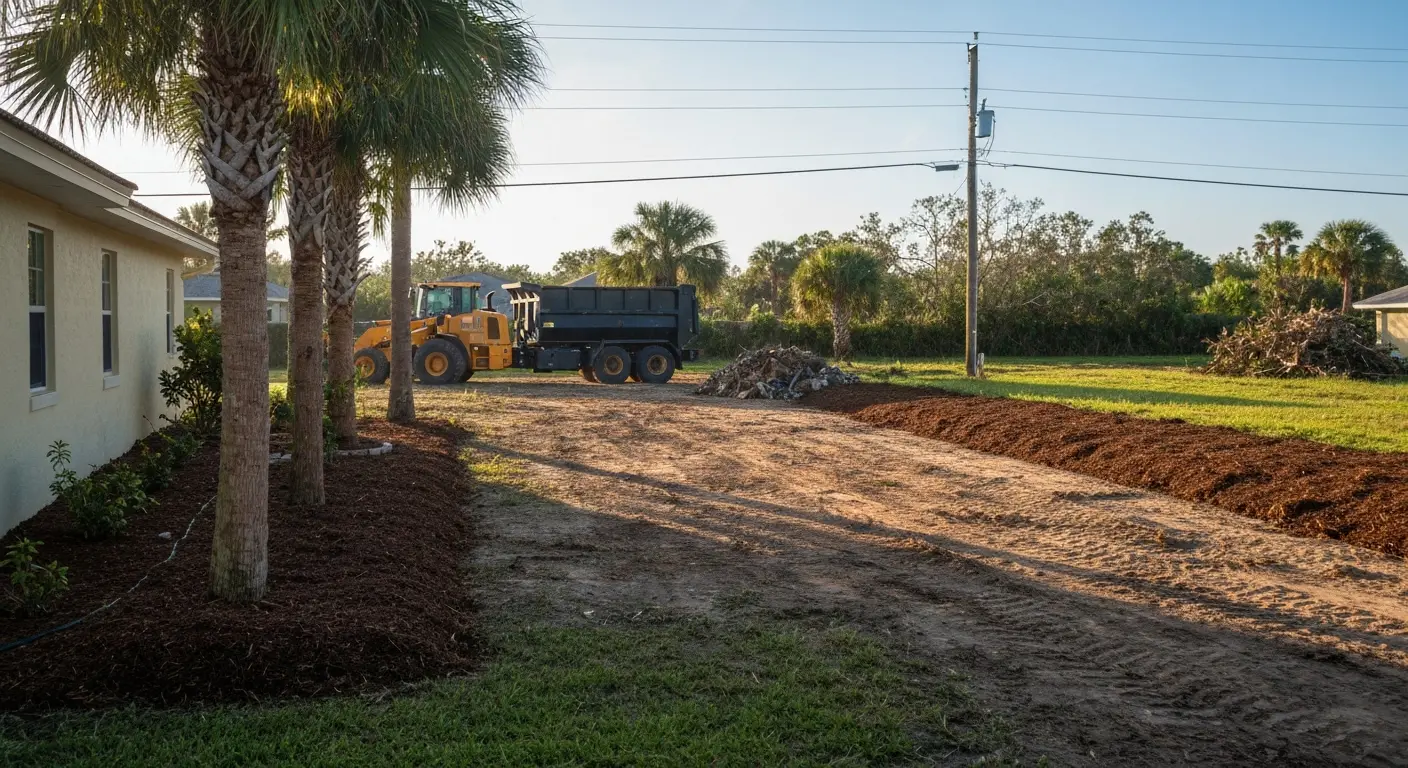
Post-Ian storm debris removal and lot restoration
Hurricane Ian's 2022 landfall left lasting impacts on Fort Myers Beach, Sanibel, and mainland properties. Barrier island reconstruction and storm-damaged lot restoration continue across Lee County. We remove debris, clear damaged vegetation, and prepare sites for rebuilding.
- Storm debris removal and sorting
- Lot restoration and grading
- FEMA-compliant site prep
Why Permits Matter Here
Lee County enforces one of Florida's most comprehensive tree protection ordinances.
Vegetation Removal Permits
Any removal of protected native trees over 4.5 inches in diameter requires a Lee County vegetation removal permit. Your application must show what will be cleared, what will be preserved, and what mitigation is planned. Violating this—or attempting to clear without it—carries significant fines and legal liability.
Gopher Tortoise Surveys
Gopher tortoises inhabit upland scrub habitats throughout Lee County. Before clearing any undeveloped upland parcel, a licensed wildlife surveyor must assess the site for active and inactive burrows. If tortoises are found, a Florida Fish and Wildlife relocation permit is required. This is not optional—it's required on most Lee County properties with sandy upland habitat.
Wetland & Canal Setbacks
If your property borders a wetland, canal, or slough, the South Florida Water Management District (SFWMD) and potentially the U.S. Army Corps of Engineers require environmental permits. Buffer distances and setbacks vary by waterway type. Violating these can halt your entire project.
This is where many property owners get tripped up. Florida has some of the most comprehensive tree protection and environmental regulations in the country, and Lee County enforces them rigorously. Professional guidance prevents costly violations.
Why Local Expertise Matters
Lee County's clearing landscape is unique. Experience here saves time and prevents headaches.
Species Knowledge
Southwest Florida's mix of native slash pine, saw palmetto, and cabbage palm alongside invasive Brazilian pepper, melaleuca, and air potato requires different removal approaches. Knowing which species require permits and which removals may be exempt from standard requirements saves money.
Municipal Variation
Cape Coral, Estero, Bonita Springs, and other Lee County municipalities layer additional requirements on top of county rules. HOA rules vary. Checking local ordinances before starting work prevents costly rework.
Efficient Permitting
We coordinate wildlife surveys, submit permit applications, and track approvals so you don't waste weeks waiting. Clear documentation and accurate site plans get approvals right the first time.
Serving Lee County Communities
We operate across the full spectrum of Lee County clearing work.
Fort Myers
Downtown revitalization, East Fort Myers lot clearing, and McGregor Boulevard residential projects. Commercial development along US-41 corridors.
Lehigh Acres
Over 100,000 undeveloped platted lots. Gopher tortoise surveys are standard. Growing residential and commercial development.
Cape Coral
Canal-laced neighborhoods. Over 400 miles of navigable waterways. Waterfront and interior lot clearing with wetland compliance.
North Fort Myers
Largest unincorporated area in Lee County. Rural lifestyle transitioning to suburban growth. Diverse lot sizes and conditions.
Bonita Springs & Estero
Growing residential and commercial areas. Mixed suburban neighborhoods. Careful permitting for protected natural areas.
Fort Myers Beach & Sanibel
Barrier island reconstruction and post-hurricane debris removal ongoing since 2022 landfall. Sensitive environmental areas.
Frequently Asked Questions
Do I need a permit to clear my Lee County property?
Most likely yes. Lee County requires a vegetation removal permit for clearing of protected native trees over 4.5 inches in diameter. Gopher tortoise surveys are required on most undeveloped upland parcels. If your property is near wetlands or canals, SFWMD permits may apply. Always check before starting work.
What if gopher tortoises are found on my lot?
A Florida Fish and Wildlife relocation permit is required. Licensed wildlife relocators move active tortoises to approved habitat. This is not optional—it's required by state law and protects your project from violations and fines.
What invasive species are most common in Lee County?
Brazilian pepper is the most widespread invasive on Lee County properties. Melaleuca creates fire hazard. Australian pine is common on coastal and waterfront lots. Cogongrass appears on many undeveloped tracts. Each requires a different removal approach, and some removals may be exempt from standard permitting.
Are there HOA or municipal rules I should check?
Yes. Cape Coral, Estero, Bonita Springs, and other Lee County municipalities have additional requirements beyond county rules. Always check with your HOA and local municipality before starting clearing work to avoid rework and violations.
What if my property is near a canal or wetland?
Buffer distances and setbacks are regulated by SFWMD and depend on waterway classification and vegetation type. Clearing within 25–50 feet of wetlands, canals, and waterbodies without proper permits can result in stop-work orders and restoration requirements. Professional guidance prevents costly violations.
Can you handle post-hurricane debris cleanup?
Yes. We specialize in post-hurricane debris removal, lot restoration, and grading for FEMA compliance. Storm recovery projects across Fort Myers Beach, Sanibel, and mainland Lee County are a core part of our work.
DISCOVER WHAT OUR CUSTOMERS HAVE TO SAY ABOUT US
REVIEWS
proudly serving these areas
Lee County, FL
Cape Coral, FL
Hendry County, FL
Bonita Springs, FL
Naples, FL
Glades County, FL
Punta Gorda, FL
Charlotte County, FL
READY TO take the next step?
get a free quote TODAY!
QUICK LINKS
our services
service areas
operating HOURS
Mon: 8:00 am - 5:00 pm
Tue: 8:00 am - 5:00 pm
Wed: 8:00 am - 5:00 pm
Thu: 8:00 am - 5:00 pm
Fri: 8:00 am - 5:00 pm
Sat: Closed - Closed
Sun: Closed - Closed